Disclaimer: Computers and Technology News Digest. This site provides computers and technology content for informational purposes only.
The global financial sector is underpinned by an absolute requirement for trust and security. As digital transformation accelerates, the tools and tactics employed to protect sensitive data, transactions, and physical assets must constantly evolve. Modern banking and financial services rely on a complex, multi-layered defense strategy that fuses cutting-edge digital technologies with rigorous physical security protocols and highly skilled personnel. This strategic defense is not just about compliance; it is fundamental to maintaining operational continuity and preserving the integrity of the capital markets. From securing complex cloud environments to ensuring the resilience of critical infrastructure, institutions are investing heavily in a continuous, proactive approach to cybersecurity and physical safety, creating a secure environment that allows global commerce to thrive.
Software Development Professionals as Security Guardians

The bedrock of any contemporary security posture rests on the quality and integrity of the underlying code, making software developing professionals indispensable to financial institutions. These experts are tasked not merely with creating functional platforms, but with implementing security from the earliest stages of design, a methodology known as “Security by Design.” This approach mandates that every feature, application, and digital service is built with robust security controls, threat modeling, and rigorous testing baked into the development lifecycle. Their work is the foundational layer that determines how well an institution can defend against the increasingly sophisticated threats originating from state-sponsored actors, organized crime, and individual hackers who are constantly probing for vulnerabilities.
Specifically, the role of these teams extends to deploying advanced security measures like end-to-end encryption, multi-factor authentication systems, and sophisticated fraud detection algorithms within customer-facing and internal applications. They perform continuous security audits, penetration testing, and vulnerability management to proactively identify and patch potential exploits before they can be leveraged by malicious actors. By adhering to strict coding standards and leveraging secure development practices, these specialized software development professionals ensure that the digital infrastructure—from mobile banking apps to back-office transaction processors—is resilient, compliant with global regulations, and capable of handling sensitive data without compromise.
Advanced Credit Union Security Software
For many community-focused financial organizations, maintaining a high level of security can be particularly challenging given limited resources, but advanced software has become a great equalizer. These dedicated platforms and tools are specifically engineered to address the unique operational and compliance needs of institutions like a credit union, providing enterprise-grade protection without the prohibitively high cost and complexity of custom-built solutions. This software suite typically encompasses a wide array of protective functions, including real-time transaction monitoring, behavioral analytics to flag anomalous activity, and integrated regulatory reporting features that simplify compliance with mandates like the Bank Secrecy Act and Know Your Customer rules.
The specificity of this security software allows it to be deeply integrated into the core banking systems used by a credit union, enabling precise control over data access and movement. Features often include robust data loss prevention (DLP) modules that monitor and restrict the transfer of sensitive member information, advanced endpoint protection for teller workstations, and secure communication channels to protect internal communications from interception. By utilizing specialized software for credit union operations, these institutions can effectively safeguard member assets and personally identifiable information, thereby maintaining the local trust that is essential to their business model while defending against evolving cyber threats.
Protecting Local Financial Services Infrastructure
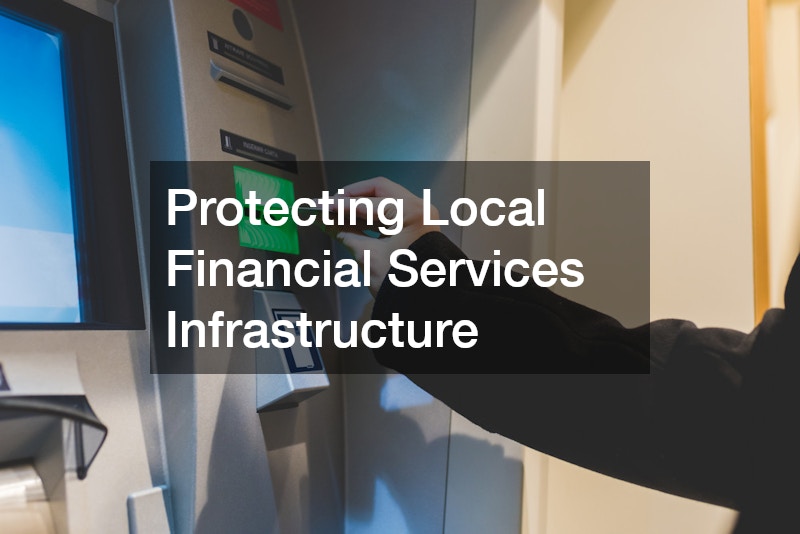
The operational resilience of local financial services depends heavily on protecting the physical and network infrastructure that supports their daily activities. These institutions, which include community banks, small asset managers, and specialized lending firms, are often primary targets for physical theft and sophisticated network intrusion due as they are often perceived as having fewer security resources than major global banks. Therefore, comprehensive protection involves a blended strategy that secures both the physical data centers, branches, and critical networking gear, and the digital pathways that connect them. This infrastructure includes everything from the core banking servers to the customer-facing ATMs and the secure VPN tunnels used for remote access.
Specifically, security measures for local financial services infrastructure often involve geo-redundant backups and disaster recovery planning to ensure services can be maintained even after a localized event, like a power outage or a severe storm. On the physical side, this includes environmental monitoring, uninterruptible power supplies (UPS), and dedicated, locked server cages, while network security relies on next-generation firewalls, intrusion detection/prevention systems (IDPS), and frequent vulnerability scanning of all perimeter devices. The deliberate fusion of physical security audits with regular penetration testing of the network perimeter is crucial to identify and eliminate weaknesses that could compromise the continuity of service and the safety of client assets.
Secure Hardware from Manufacturing to Installation
The security of a financial institution’s digital environment begins long before a server is turned on, tracing back to the supply chain and the secure manufacturing of its core electronics. Trustworthy hardware is the essential foundation upon which all software-based security is built, requiring strict protocols during the process of electronics manufacturing, software development, and deployment. This focuses on ensuring that devices are free from firmware backdoors, unauthorized components, or deliberate tampering, a risk known as a supply chain attack. Secure provisioning and validation must be implemented at every stage, from the chip fabrication plant to the final integration into the financial institution’s data center.
To combat these threats, institutions often require their vendors to provide auditable documentation proving the integrity of the electronics manufacturing software used to produce their equipment. This involves using trusted execution environments (TEE) in processing chips, secure boot processes that verify firmware integrity upon startup, and strict inventory control to prevent device swapping. Furthermore, the use of hardware security modules (HSMs) is critical; these physical computing devices safeguard and manage digital keys for strong authentication and encryption, ensuring that cryptographic operations are performed in a hardened, tamper-proof physical environment that provides the highest level of assurance for sensitive financial data.
CPA Firms‘ Role in Financial Data Integrity

While often viewed as audit and compliance experts, CPA firm professionals play a critical, front-line role in safeguarding the integrity of financial data, making them essential partners in an institution’s overall security architecture. Their primary contribution involves ensuring that internal controls are correctly designed, implemented, and functioning effectively to prevent fraud, detect errors, and guarantee the reliability of financial reporting. This focus on internal control frameworks, such as SOC 1 and SOC 2 reports, directly addresses the non-cyber aspects of security, ensuring that operational processes themselves do not introduce vulnerabilities that could compromise financial assets or client data.
The expertise of a CPA firm is particularly vital in the context of regulatory compliance, where security failures can lead to massive fines and reputational damage. They assess the effectiveness of IT general controls (ITGCs), which include controls over program development, change management, and logical access to data and systems. By performing independent audits, they provide an objective check on the effectiveness of the security tools and protocols implemented by the financial institution, verifying that the entire control environment is robust enough to protect against both internal and external threats, thereby maintaining stakeholder confidence and adhering to legal requirements.
Engineering Secure Physical and Digital Environments
The holistic protection of financial institutions requires rigorous planning and execution from specialized engineering companies, moving beyond just software to secure the entire operational footprint. These firms are critical in designing and implementing integrated security systems that address both the cyber and physical threat landscapes, ensuring that buildings, data centers, and network architectures are robustly protected against a wide array of potential attacks. This includes the structural fortification of server rooms, the deployment of secure power and cooling systems, and the implementation of hardened network infrastructure designed to withstand high-volume distributed denial-of-service (DDoS) attacks.
Specifically, the expertise provided by these engineering companies often involves complex site assessments to determine points of vulnerability in facility layouts and network configurations. On the digital side, they architect and deploy sophisticated network segregation techniques, such as micro-segmentation, which limits lateral movement for attackers within a financial network. Physically, they design secure entryways, anti-tailgating systems, and highly resilient construction materials for sensitive areas. This level of comprehensive, cross-domain security engineering companies provide ensures that all facets of the institution’s environment are protected by physical barriers and digital defenses that work in concert.
Implementing Robust Access Control for Facilities
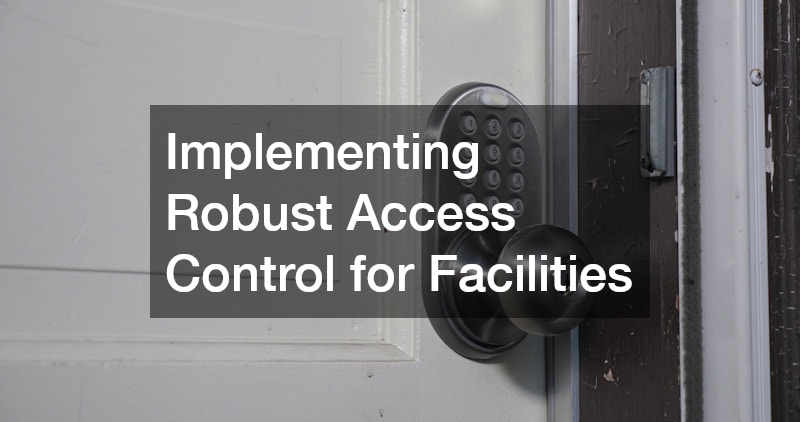
Controlling and monitoring who enters and leaves a financial institution’s premises is a cornerstone of its overall security strategy, making the deployment of sophisticated access control installation a necessary priority. These systems manage not only the main entrances but also highly sensitive internal areas, such as server rooms, vault areas, and back-office operations where confidential data is processed. The goal is to prevent unauthorized physical access, which can lead to theft, espionage, or the planting of malicious hardware devices. Effective access control provides an audit trail of movement throughout the facility, which is invaluable for forensic investigation in the event of a security breach.
Modern access control installation goes far beyond traditional key cards, incorporating biometric identifiers (like fingerprint or iris scans), smart readers, and integrated video surveillance systems for real-time verification. These systems are often tied directly into the institution’s security policy, allowing for time-based access restrictions and role-based security profiles that dictate exactly which personnel can enter specific areas and when. Furthermore, for highly secure areas, two-person rule protocols are enforced, requiring multiple authenticated credentials to unlock a door, significantly enhancing protection for the most critical assets.
The Critical Role of Secure Document Shredding
While much attention is rightly focused on digital threats, the disposal of physical media and sensitive paperwork represents a significant vulnerability that requires a dedicated security solution like a document shredding service. Financial institutions generate vast quantities of physical records—including client statements, internal memos, and audit reports—that contain highly sensitive, personally identifiable information (PII) or proprietary corporate data. Improper disposal of these materials can lead to identity theft, corporate espionage, and severe regulatory non-compliance penalties, particularly under laws like Gramm-Leach-Bliley and various data privacy acts.
A professional document shredding service ensures that this risk is mitigated through certified destruction processes. These services typically employ industrial-grade cross-cut shredders that reduce paper to particles that are impossible to reconstruct, adhering to strict industry standards for secure destruction. Furthermore, many services offer secure, on-site shredding performed under the supervision of the institution’s personnel, along with a certified certificate of destruction, which provides a critical audit trail for compliance purposes. This step is a non-negotiable component of a comprehensive data lifecycle management strategy that protects information from creation to final, secure disposal.
Integrated Fire Suppression System Protecting Assets
The protection of a financial institution’s critical assets is incomplete without a robust and modern fire suppression system, which is vital for preserving physical infrastructure and the integrity of data within server rooms and storage vaults. Fire damage can be catastrophic, leading to immediate operational downtime, permanent loss of irreplaceable data, and massive replacement costs, all of which pose a far greater threat than many physical security breaches. Therefore, these systems are engineered to detect, contain, and extinguish fires rapidly while minimizing damage to sensitive electronic equipment.
The most advanced fire suppression system installations utilize clean agent technology, such as inert gas or chemical suppressants, rather than traditional water-based sprinklers in areas housing servers and networking gear. These clean agents quickly remove the heat or oxygen needed for combustion without leaving behind residue that could short-circuit electronics or destroy physical documents. The systems are integrated with sophisticated smoke and heat detection sensors, often involving multiple stages of alarm and activation to prevent false deployment, thereby ensuring that a quick, targeted response is initiated to protect the institution’s continued operation and highly valuable digital assets.
Essential Safety Products for Employee and Customer Well-being
Beyond the high-tech defenses of cybersecurity and physical access controls, the fundamental safety and security of all occupants—employees and customers alike—is assured through the strategic deployment of essential safety products. While often viewed through a simple compliance lens, these tools are a critical component of risk management, ensuring that the financial institution is prepared to handle emergencies, from medical incidents to active threats, thus maintaining confidence and operational continuity. A secure environment is one where everyone feels protected.
This category of safety products includes automated external defibrillators (AEDs), comprehensive first-aid kits, clearly marked emergency exits, and panic buttons or duress alarms integrated into teller stations and private offices. Furthermore, effective communication systems, such as public address systems and internal alert mechanisms, are crucial for quickly relaying instructions during an emergency. Regular training on the use of these safety products and on emergency protocols, like shelter-in-place or evacuation procedures, transforms the equipment into a functioning safety net, providing personnel with the tools and confidence to respond effectively to any crisis.
The security technology deployed across financial institutions represents a sophisticated, integrated defense ecosystem designed to uphold the industry’s bedrock principles of trust and reliability. This holistic approach seamlessly blends cutting-edge digital defenses—built and maintained by expert professionals—with rigorous physical security protocols, encompassing everything from fire safety to access control and secure asset disposal. The investment in these comprehensive layers of technology is not merely a cost of doing business; it is a strategic imperative that shields sensitive client data, maintains the integrity of critical financial systems, and ensures operational continuity against a constantly evolving threat landscape. By continuously adopting and integrating these specialized security measures, financial institutions effectively manage risk and provide the secure environment necessary for global commerce to function.